
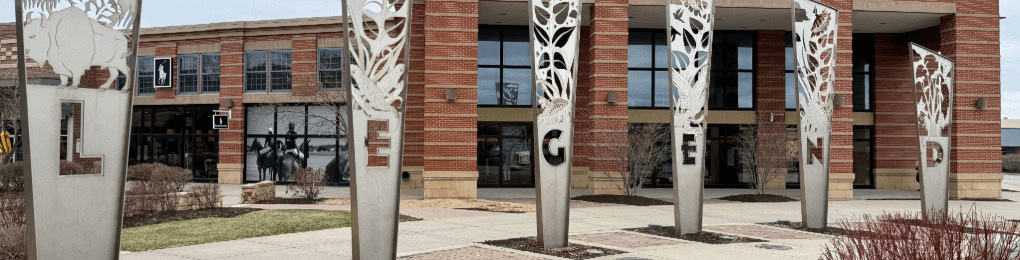
Matt Fowler KC – stock.adobe.com
The lights at Legends Outlets Kansas City were going out, driving people away after the sun went down. But that wasn’t their only problem, and it definitely wasn’t their biggest issue. Their electrical panels were disorganized, dangerous, and barely holding on. Our commercial electricians knew exactly how revitalize Legends’ electrical system thanks to our experience with countless other commercial properties. In this case study, we’ll cover just how we made this project a success:
- We took time to understand the project
- We made the site safe and created a plan
- We traced circuits when tools were not enough
- We implemented the one-wire rule
- We replaced electrical panels and fit modern systems into old spaces
- We adapted modern technology to legacy systems
Let’s break down exactly how our team of commercial electricians tackled Legends’ massive electrical panel upgrade and helped optimize their brilliant lighting.
Step 1: We Took Time to Understand the Project
Lighting control systems sound simple on paper, but in real commercial buildings, they can actually be quite complicated. Legends was no exception. Our commercial electricians initially went in to fix a few pole lights, but while walking through the control panels, we immediately saw there were larger issues.
The electrical panels weren’t just old; they were confusing, crowded, and risky. Over the years, thousands of hands had touched the system. The result?
- Wires bundled together with no clear path
- Labels that no longer matched what the wires actually fed
- Circuits that had been moved without updating documentation
- Wrong voltages landing on the wrong equipment
- Panels packed tightly with no room to work safely
This is a common issue in large retail spaces. Lighting controls are often modified as stores change, tenants move, or layouts shift. It was clear that Legends didn’t just need electrical repair; they needed a full electrical panel upgrade done the right way.
Step 2: We Made the Site Safe and Created a Plan
Before replacing electrical panels or touching control wiring, safety had to come first. That’s why our team of commercial electricians started the project with a full walk-through of the system. We opened panels, took photos, and mapped what we could see. We didn’t assume the labels were still accurate. The goal of this process was to answer three questions:
- What is known?
- What is unknown?
- What could cause harm if handled incorrectly?
Older lighting control systems can hide serious risks. A wire that looks inactive may still carry voltage, and a mislabeled circuit can shut down the wrong area. This is why planning matters so much in commercial electrical services. Once we understood the risks of this system, we were ready to plan the order of repairs, so lighting stayed on where it was needed and tenants were not disrupted. The project was ready to go, we knew what repairs were needed, but the wires were still a mess that had to get sorted.
Step 3: We Traced Circuits When Tools Were Not Enough
In most commercial jobs, electricians rely on tracing tools. These include circuit tracers, underground tracers, and meters. All these tools save time and reduce guesswork, which is why we brought each piece of equipment to Legends. But then we hit a problem.
The site had heavy electromagnetic interference that caused false readings and mixed signals. Tracing tools pointed to the wrong paths and signals overlapped. So, our team adjusted. Instead of relying on high-tech tools, we switched to manual verification. Our commercial electricians physically traced wires, tested connections, and confirmed results by hand across the 700,000-square-foot shopping center.
Technically, we could have skipped these steps and just rewired the entire system, but we wanted to do things right. We couldn’t let those messy wires stay put, so our commercial electricians worked hard and paid attention to detail to ensure the new system was organized and worked properly.
Step 4: We Implement the One-Wire Rule
At Legends, there was only one safe way forward: one wire at a time. We call this the one-wire rule. Here’s how it works:
- Pull one wire free
- Identify it
- Test it
- Label it
- Place it back clean
- Document the result
- Move on to the next wire and repeat
This process is slow, but it prevents mistakes. It stops wires from being mixed and ensures each circuit does what it should do. Our commercial electricians also created clear labels and updated maps as they worked. As a result, Legends’ electrical system will forever be safer and easier for other electricians to work on in the future.
Step 5: We Replaced Electrical Panels and Fit Modern Systems into Old Spaces
Replacing electrical panels in a modern home is usually straightforward. In older commercial sites, it is not. Modern panels are often larger, messier, and require different spacing and clearances. At Legends, the existing infrastructure was never designed for today’s equipment. That meant we had to design solutions, not just install parts. Our team of commercial electricians got to work by:
- Reorganizing panel layouts to improve access
- Remapping circuits so the system made logical sense
- Designing ways to fit larger panels into existing spaces
- Ensuring clear working room for future electrical service
This wasn’t just an electrical panel upgrade; it was a full system redesign.
Step 6: We Adjusted Modern Technology to Legacy Systems
One of the hardest parts of this job was connecting modern lighting control technology to older wiring paths. This required constant decisions, including:
- When to safely junction and extend existing wires
- When to adapt existing conduits entering panels
- When to use gutters to transition wiring
- When to run individual new wires
- When to abandon a plan and build a better one
Sometimes, the original plan just didn’t fit. Physical space, newly discovered issues, or signal behavior forced changes. This is where our 25 years of electrical design experience made a difference. Our team has seen countless generations of electrical systems, so we know exactly what works and what fails over time.
The Result: A Stable, Safe, Documented Electrical System
When our work was complete, Legends Outlets had:
Light Control Panels That Worked
Legends’ control panels needed constant attention and fixes to keep the lights on in their 700,000 square foot shopping center. Our expert electrical panel upgrades made these systems run so smoothly; the teams at Legends don’t even think about them anymore. Now lights turn on when and where they’re supposed to.
Correct Voltage Applied to the Right Equipment
Outdated control panels simply can’t handle the amount of electricity needed to keep the lights on. And disorganized wiring can’t deliver the right levels of electricity to each piece of equipment. Legends faced both of these problems, so we stepped in to fix the situation. Thanks to their electrical panel upgrades and correct wiring, every piece of equipment in their 700,000 square foot mall receives the power it needs to run smoothly.
Clear Labels and Documentation
Disorganized cables don’t just disrupt power flow but also make it difficult to update electrical systems. If commercial electricians don’t know which wires lead where, any sort of electrical repair is going to require far more time and effort. By rewiring and labeling wires as we went, our commercial electricians have made it easier for people to navigate these systems in the future.
Retail environments change often, so we knew the electrical system needed to be easy to adjust. This doesn’t just make it easy to implement the latest lighting technology, but also keeps everyone safe during and after the switch.
Commercial Electrical Services FAQs
What does a commercial electrician do for lighting control systems?
A commercial electrician designs, installs, and maintains electrical systems for large buildings. For lighting controls, that includes panels, wiring, signals, and safety planning.
How do I know if my building needs replacing electrical panels?
If panels are crowded, mislabeled, unsafe, or unable to support current loads, replacing electrical panels may be needed.
What is included in an electrical panel upgrade?
An electrical panel upgrade may include new panels, circuit reorganization, wiring updates, labeling, and documentation.
Why do lighting control panels fail in older buildings?
They fail due to repeated changes, poor documentation, and outdated designs that no longer match how the space is used.
What causes wrong voltages in lighting systems?
Mislabeled circuits, moved wiring, and improper modifications can send incorrect voltage to equipment.
How do electricians trace wires with missing labels?
Electricians use tracing tools, meters, and manual verification. In some cases, wires must be traced by hand.
Can electromagnetic interference affect tracing?
Yes. EMI can distort signals and cause tracing tools to give false readings.
Can lighting panels be upgraded without shutting down tenants?
Yes, with careful planning and staged work, disruption can be minimized.
Is retrofit or full redesign better?
It depends. Research shows some systems can be retrofitted, while others need full redesign to remain stable.
What documentation should I ask for after electrical service?
You should receive updated panel schedules, labels, and notes showing how the system works.
Does Your Electrical Panel Need an Upgrade? Landis Electric Can Help!
Whether you own a 700,000 square foot shopping mall or a 1,000 square foot home, if your electrical panels aren’t working right, your entire electrical system is at risk. At best, you’re stuck with disorganized wires; at worst you’re one plug-in away from an electrical fire. Don’t wait until a major issue strikes. Call to schedule a consultation with one of our expert electricians today and get the electrical panel upgrade your system needs to run smoothly.
Enjoy content from Landis Electric KC? Make us one of your preferred sources on Google.